6 Practices to Help Workers Ease Back Into an Onsite Work Pattern

The following is adapted from a news release published on May 18, 2021. 

As nearly 70 percent of Americans feel we’re emerging from the pandemic, more workers will be expected to return to work. And that can cause anxiety.

Since May is Mental Health Awareness Month, I shared six practices to help workers ease back into an onsite work pattern.

We are social beings. The year in isolation threw off our flow of sociality. When we embark on a new normal world, many will likely be a bit wobbly as we ease back into the office socially. We need to go easy on ourselves because it will all work out.

1. Slow Down and Breathe

First, slow down and breathe to soak in the moments you’re experiencing now.

2. Practice Self Care

Apply a healthy dose of self-care by wrapping yourself up in nature and connecting with experiences that matter most to you, whether that be with friends, family, or yourself alone.

3. Believe in Yourself

Believe that you are good enough, that you can do it. If you don’t believe in yourself, lean on my grandpa’s teaching: ‘Fake it until you make it.’ That’s a great way to gain confidence and propel forward with any task you face.

4. Live in the Moment
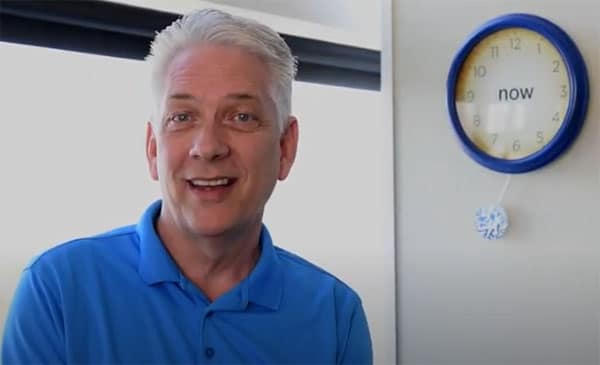
Be Present - Ease Back Into Post-Pandemic WorkEnjoy the time you have now and plan for the future with confidence. From my experience, planning for the future is exceptionally smart, but worrying about the future yields no good thing. I even have a clock in my office to remind me of this.

5. Serve Others

Lift another person up, look outside of yourself and see who can use your help, your smile, and even your simple greeting today. When we lose ourselves in the service of others, we find strength and purpose.

6. Exude Optimism

Convince yourself that everything will work out for you just fine. I’ve quoted a poem in my book called, ‘Things Will Work Out,’ which posits that when we look back at our lives, we will realize everything has indeed worked out. To continue that success, we should focus energy on current situations to ensure positive solutions. It’s a simple and powerful concept.

Applying such practices can help today’s workers ease back into post-pandemic office work and live a life today in harmony with one’s core values.

All proceeds from All the Right Reasons are directed to feed two million meals to hungry children. Available on Amazon, the book provides 40 meals for every single purchase.
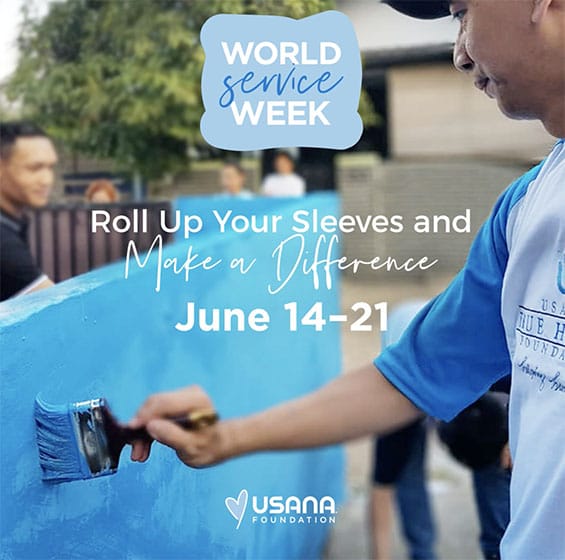
World Service Week 2021: Giving Back to Your Community

We’re less than a month away from USANA World Service Week. Each year, the USANA Family joins together around the world to give back. This year’s global event will take place June 14-21, 2021.

As you may know, one of my all-time favorite quotes, which is attributed to Winston Churchill, is:

“We make a living by what we get, but we make a life by what we give.”

Truly, the things that really matter are what we can do to help others. Many of us are blessed to be in a position where we can give of our time and our money to help out those less fortunate.

Over the next little while, The USANA Foundation’s blog and social media will share stories about individuals who are making a difference in their communities.

Most recently, I read about why, in 2019, Canadian bobsledder Alex Kopacz joined the Foundation’s mission to Chiang Mai, Thailand. The Olympic gold medalist and USANA athlete served “to help families living in abject poverty who lacked the means to feed themselves,” the article says. “Along with 24 other volunteers, he helped the locals build lasting, sustainable food sources.”

What an inspiring story. I encourage you to read the article, and then I invite you to make a commitment to serving your own community during World Service Week.

World Service Week 2021

Giving Back

There are so many opportunities to get involved and to make a difference. Please send me a message with how you’re planning to give back during USANA’s fifth annual World Service Week. It could be included in next month’s e-newsletter.

If you’re looking for inspiration, you can donate, learn how to become a USANA Foundation Ambassador, or fundraise through the USANA Foundation website.

Note: A version of this article originally went to e-newsletter subscribers on May 20, 2021. If you’d like to subscribe, I invite you to do so here.

5 Things I Wish Someone Told Me Before I Became a CEO

5 Things I Wish Someone Had Told Me Before I Became a CEO

5 Things I Wish Someone Had Told Me Before I Became a CEO

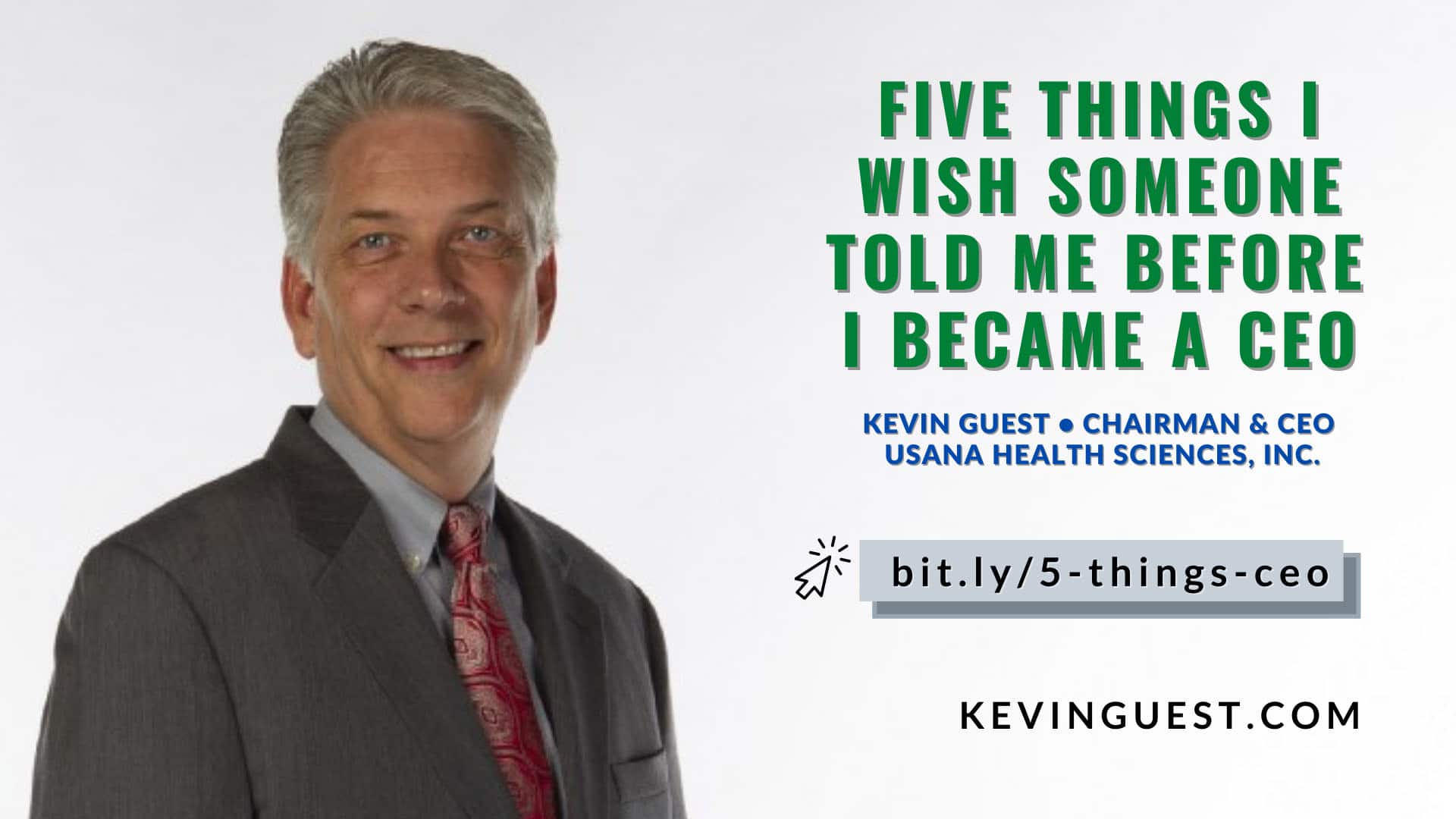
Parveen Panwar, Mr. Activated on social media, invited me to speak as part of his “5 Things I Wish Someone Told Me Before I Became a CEO” series on Medium.

Read the entire article in Authority Magazine online.

The article includes answers to question such as:

  1. How I embarked on my career path
  2. What I found interesting about the role once I became CEO
  3. Who’s mentored me to help me in my journey
  4. Why diversity, equality, and inclusion are so important
  5. And a few myths about being a CEO

Then, we got into the heart of the article. I provided 5 things I wish someone told me before I became a CEO.

5 Things I Wish Someone Told Me Before I Became a CEO

Please take a look at the full article in which I expand on the following points. I wish someone would have…

  1. Better educated me on government relations and affairs
  2. Told me that every single member of the senior executive team has value
  3. Better educated me from a financial perspective on publicly traded companies
  4. Better explained the delicate nature of family dynamics in a family-founded business
  5. Told me more about international commerce for a global company

Thank you to Parveen Panwar — Mr. Activated — for inviting me to participate in his series. I enjoyed sharing my thoughts, and I hope my answers provide value to you personally or professionally.

The Cardboard Keyboard Principle: Choose to Use Positive Self-Talk

The Cardboard Keyboard Principle. In the video below, I relay a harrowing story about a young woman in Rwanda. A civil war had erupted, devastating her small village and leaving many fighting for their lives.

All the Right Reasons Book CoverImmaculee Ilibagiza hid in a bathroom as killers lurked outside the window. For days, this woman feared for her life. Yet, her thoughts were hopeful and uplifting. She imagined her life once she was rescued — working at the United Nations.

Immaculee read books and taught herself English, all while violence raged just outside her door. She drew a replica of a computer keyboard on a piece of cardboard and spent hours learning how to type.

Immaculee survived by keeping hope in her heart and telling herself she would be okay. She prepared for her future.

It would have been easy — and understandable — for Immaculee’s thoughts to turn dark. For her to consider the situation hopeless and to give up. She could have let negative self-talk overwhelm her spirit.

But she didn’t. She used her inner voice to think positively about her seemingly dire situation. And it helped her escape. It allowed her to ultimately realize the life she visualized herself living.

View additional videos on my YouTube channel

The Power of Self-Talk

Managing self-talk is a significant personal difficulty for me. I constantly struggle to eliminate the negative voice in my mind.

At my first Grand Ole Opry performance with Collin Raye.

Many have heard me tell the story, which is also included in my book, All the Right Reasons, of standing off stage at the Grand Ole Opry. I’m about to perform with country music superstar Collin Raye—a phenomenal opportunity on one of music’s biggest stages—and my inner voice is filling my mind with doubt.

What are you doing? You’re not a professional musician. You don’t deserve to be here. What if you make a mistake and ruin the whole show?

Fortunately, I’ve developed strategies and techniques to quiet the negativity and amplify the positive self-talk.

I’ve worked hard to learn the music. I’ve trained and practiced for years for this opportunity. It’s going to be an awesome show!

As individuals, we tend to be harder on ourselves than anyone else is. But the good news is positive self-talk is even more powerful than negative self-talk. Learning how to channel and elevate the voice in your head can change your life.

I encourage each of you to take note of the chatter happening inside your head. With practice, we can consciously choose positive self-talk (and limit negative self-talk) to help make our lives better.

A version of this article went to email subscribers on April 21, 2021. I invite you to subscribe here. Please consider contributing to the USANA Foundation. Its mission is to ensure that impoverished children and families reach their fullest potential by providing food and nutrition.